

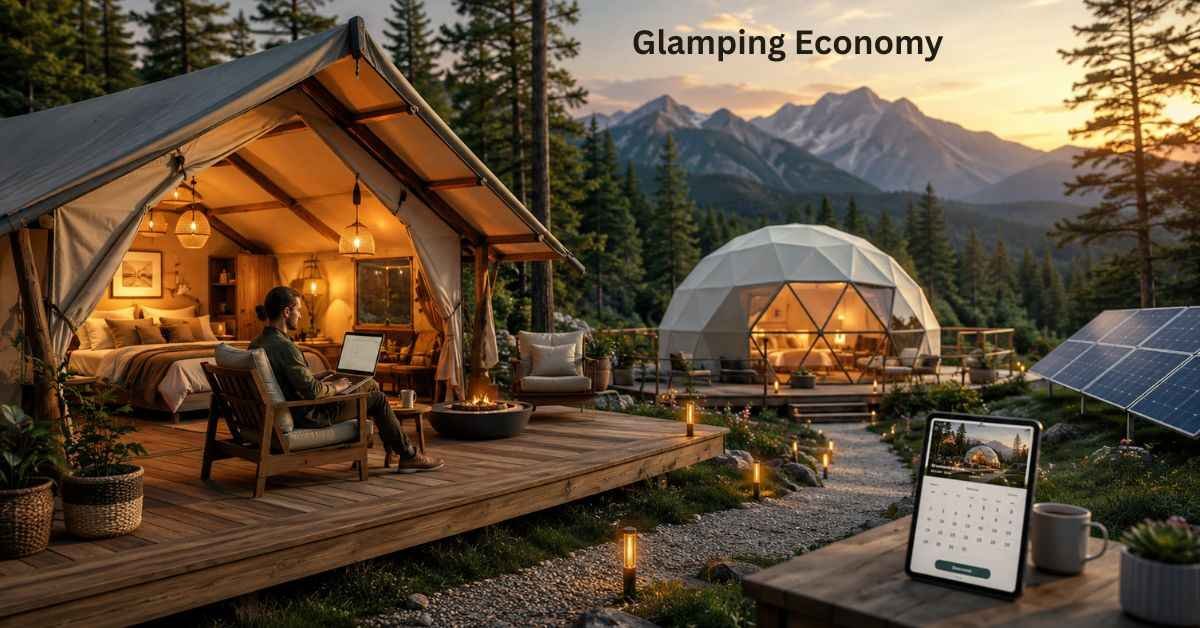
Introduction
Travel habits are changing in 2026. More people want to spend time in nature, but they don’t want to give up comfort. They still want soft beds, clean bathrooms, electricity, and internet even when staying in the middle of the woods or near a mountain. This new way of traveling has helped the glamping economy grow quickly around the world.
Glamping, which means “glamorous camping,” mixes outdoor adventure with hotel-style comfort. What started as a small trend has now become a billion-dollar industry. From luxury tents and domes to treehouses and cabins, travelers are choosing unique stays over traditional hotels. In this article, you will learn how the glamping economy is growing in 2026, why demand is increasing, how businesses make money, and what makes these outdoor stays successful.
What is the Glamping Economy?
The glamping economy refers to all the businesses and services connected to luxury camping. It includes companies that rent out rooms, make reservations, build homes, provide energy, and organize tours.
Glamping means “glamorous camping.” Unlike traditional camping, guests do not sleep in basic tents or cook over a fire. Instead, they stay in stylish spaces with real beds, bathrooms, lighting, and often climate control.
This sector includes:
- Safari tents
- Geodesic domes
- Luxury cabins
- Treehouses
- Airstream trailers
The glamping economy is not just about tents. It is about creating premium outdoor experiences that feel safe, comfortable, and memorable.
Market Size and Growth in 2026
The glamping economy continues to grow strongly in 2026. Industry research reports show the global luxury camping market is now worth around $7 billion, with steady yearly growth. North America and Europe lead the market, but Asia-Pacific is expanding quickly due to rising tourism and eco-resorts.
Global Market Overview (2026)
| Region | Estimated Market Share | Growth Trend |
| North America | 38% | Stable, strong demand |
| Europe | 32% | Focus on eco-tourism |
| Asia-Pacific | 18% | Fast expansion |
| Other Regions | 12% | Emerging interest |
Several factors are driving this growth:
- Remote work allows people to travel more often.
- Families want outdoor trips that feel safe and clean.
- Couples look for romantic and private escapes.
- Travelers prefer unique experiences over traditional hotels.
Because of these trends, the glamping economy is expected to keep expanding over the next few years.
Why Travelers Love Luxury Camping
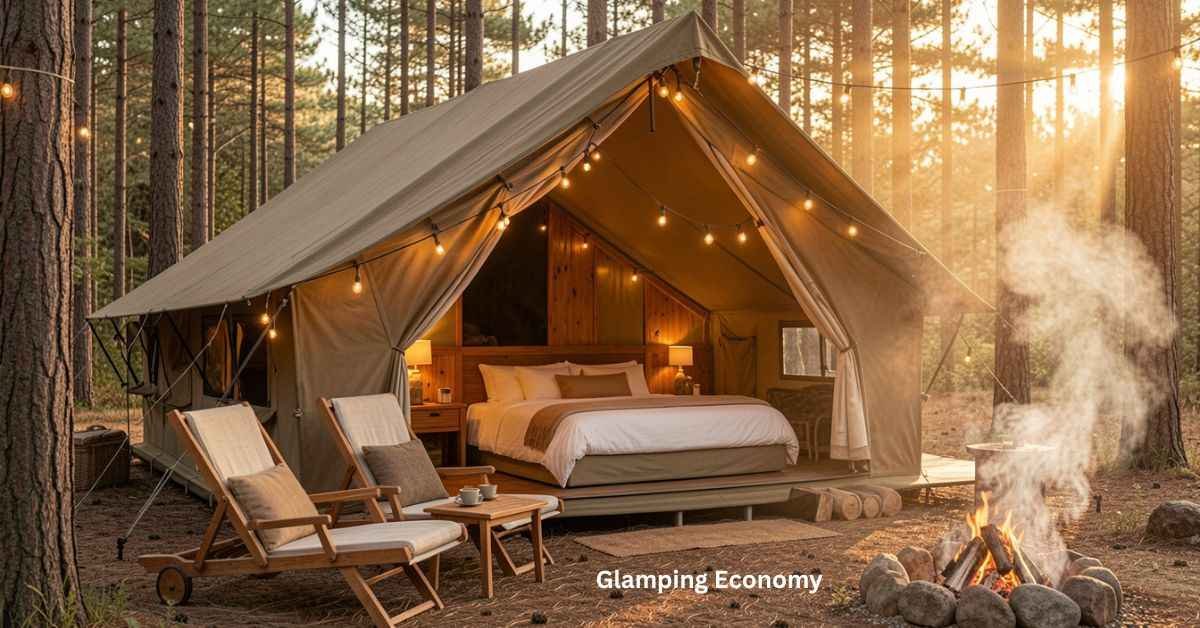
Modern travelers want more than just a hotel room. They want stories and experiences. Luxury camping gives them both.
- First, it offers comfort in nature. Guests can wake up to birds singing but still enjoy hot showers and coffee machines.
- Second, it feels private. Many sites are located away from busy cities, giving guests peace and quiet.
- Third, it is social media friendly. Beautiful domes and treehouses attract attention online. Many bookings now come from Instagram and travel blogs.
Most importantly, glamping feels special. It combines adventure with relaxation. This emotional appeal is a major reason the glamping economy keeps growing.
Who is Driving Demand?
Different types of travelers are helping this industry expand. Millennials and Gen Z travelers love experience-based trips. They prefer unique stays over traditional hotels. Remote workers often book longer stays. They want reliable internet, quiet surroundings, and inspiring views.
Families choose luxury camping because it feels safer and more comfortable than basic campsites. Couples book glamping sites for anniversaries, proposals, or weekend getaways. These groups spend more per night compared to standard campers. Their spending supports the growth of the glamping economy across many regions.
How Glamping Businesses Make Money
Owners in the glamping economy earn revenue from different sources. The main income comes from nightly stays. Prices usually range from $150 to $600 per night, depending on location and amenities. Extra income comes from guided tours, food packages, equipment rentals, and special event bookings such as weddings.
Some properties also sell branded products like blankets, mugs, or local crafts. Luxury camping sites often have lower construction costs than hotels. Because of this, many operators achieve healthy profit margins if occupancy stays high. Location, guest experience, and good online reviews play a big role in long-term success.
Startup Costs and Investment
Starting a glamping business requires careful planning. Costs depend on the type of structure and location. Below is a simple cost comparison for 2026.
Estimated Setup Costs Per Unit (2026)
| Accommodation Type | Average Cost Range |
| Safari Tent | $20,000 – $45,000 |
| Geodesic Dome | $30,000 – $65,000 |
| Luxury Cabin | $70,000 – $150,000 |
| Treehouse | $90,000 – $200,000 |
Other important expenses include:
- Land preparation
- Water systems
- Waste management
- Permits and licenses
- Power installation
Many investors see returns within three to five years, depending on occupancy rates and pricing strategy. The glamping economy attracts both small entrepreneurs and larger hospitality brands because entry costs are lower than building a full hotel.
The Role of Power and Energy Systems
For the glamping business to work, power must be reliable. Guests expect lighting, charging outlets, heating or cooling systems, and hot water. There are three main energy options used in luxury camping:
- Grid connection works well if the site is near existing infrastructure. However, connecting remote land can be expensive.
- Solar power with battery storage is popular in 2026. It reduces long-term energy costs and supports eco-friendly branding.
- Hybrid systems combine solar and backup generators. These systems provide stable power even during cloudy weather.
Energy planning is critical. Poor power systems can lead to bad reviews and unhappy guests. Smart energy management helps reduce costs and improve sustainability.
Sustainability and Eco-Friendly Travel
Sustainability is no longer optional. Many guests choose sites based on environmental practices. Luxury camping properties often use solar panels, rainwater collection systems, and eco-friendly building materials. People like low-impact designs that keep woods and wildlife safe.
In fact, environmental awareness is one of the main reasons the glamping economy continues to expand. Travelers want to enjoy nature while preserving it. Operators who highlight green practices often attract loyal customers and positive reviews.
Technology and Guest Experience
Technology plays a big role in modern outdoor stays. Contactless check-in systems save time. Smart locks improve security. Online booking systems make reservations easy. Fast internet is especially important for remote workers. Without strong connectivity, longer stays become difficult.
Dynamic pricing software also helps owners adjust rates based on demand. This increases revenue during peak seasons. Even though guests stay in nature, they still expect modern convenience. Technology helps balance comfort with adventure.
Challenges in the Industry
Despite strong growth, the glamping economy faces challenges. Zoning laws can limit where sites are built. Environmental regulations may require special permits. Seasonal weather can affect bookings. Some locations operate mainly during spring and summer.
Staffing remote areas can also be difficult. Owners often need multi-skilled workers who can manage maintenance and guest services. Careful planning reduces these risks. Researching local laws and climate patterns before investing is very important.
Future Outlook for 2026 and Beyond
The future of the glamping economy looks bright. More investors are entering the market. Large hotel brands are launching outdoor concepts. Wellness tourism is also blending with luxury camping. Many sites now offer yoga retreats, spa services, and digital detox programs.
Modular building designs are making expansion easier and faster. New eco-friendly materials reduce environmental impact. As travelers continue to seek meaningful and nature-focused experiences, this industry will likely grow even stronger.
FAQs
What is the glamping economy?
It is an industry built around luxury camping accommodations and related services.
Is luxury camping profitable?
Yes, many operators earn strong returns with good occupancy rates.
How much does it cost to start?
Costs usually range from $20,000 to $200,000 per unit, depending on the structure.
Why is it growing so fast?
Travelers want unique, comfortable experiences in nature.
Is it eco-friendly?
Many sites use solar power and sustainable materials to reduce impact.
Conclusion
The glamping economy in 2026 is more than a travel trend. The industry is growing quickly around the world and combines comfort, nature, and smart business. With billions in market value and rising traveler demand, luxury camping offers strong opportunities for investors and entrepreneurs. Success depends on good planning, reliable power systems, and a focus on guest experience. Sustainability and technology also play major roles in staying competitive.
As more people look for peaceful escapes with modern comfort, the glamping economy will continue to expand across the world. If you are considering entering this market, start by researching your location, understanding startup costs, and planning reliable energy solutions. With the right strategy, you can build a profitable and future-ready outdoor hospitality business.