

Introduction
In an emergency, people often feel scared and confused. Smoke fills the air. Lights may go out. Crowds start moving fast. In those moments, clear exit guidance can save lives. Most buildings use wall or ceiling exit signs. These signs work well in normal conditions. But during a fire or power failure, smoke can block overhead signs. People also tend to look down while walking quickly, especially in crowded areas.
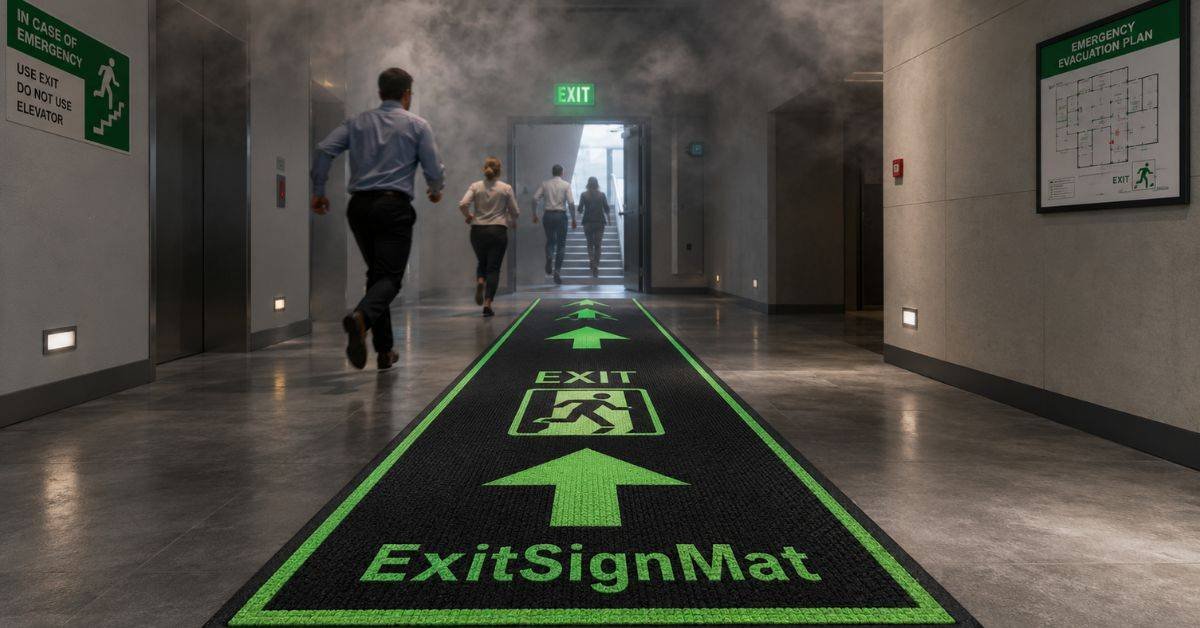
That’s where an exitsignmat becomes useful. An exitsignmat is a special safety floor mat that shows clear exit directions. It sits on the ground and guides people toward emergency exits. Because it is placed at floor level, it stays visible even when smoke rises.
In this guide, you will learn: What an exitsignmat is, Why floor-level guidance matters, How it compares to traditional signs, Safety rules in 2026, Costs, installation, and maintenance. Let’s explore how this simple solution can make buildings safer.
What is an ExitSignMat?
An exitsignmat is a durable floor mat designed to highlight emergency exit routes. It combines two functions:
- A non-slip safety mat
- Clear exit markings or arrows
Some versions glow in the dark. Others use LED lights. Many are made from rubber or strong synthetic materials that handle heavy foot traffic. Unlike small stickers on the floor, an exitsignmat is thicker, stronger, and made for long-term use. It can be placed near exit doors, at hallway corners, or at stair entrances.
Because it is placed on the ground, it works well in low-visibility conditions. Smoke rises, but floor-level signs stay clearer longer.
This makes the system helpful in:
- Offices
- Schools
- Hospitals
- Warehouses
- Shopping centers
It does not replace overhead exit signs. Instead, it supports them.
Why Floor-Level Exit Signs Matter in Emergencies
Smoke tends to rise up toward the ceiling during a fire. This can block wall and ceiling signs within minutes. According to fire safety research available in 2026 from U.S. safety agencies, people naturally lower their bodies during smoke exposure. Many even crawl.
That means they look toward the ground for direction. A floor-based system gives clear visual guidance where people are already looking. Here are some reasons why this works so well:
- It remains visible under smoke layers.
- It is not hidden by crowds.
- It helps children and wheelchair users.
In busy places like theaters or airports, overhead signs can be blocked by other people. A clearly marked exitsignmat on the floor is easier to see between moving feet. When used together with wall signs and emergency lights, it adds another layer of protection.
How It Compares to Traditional Exit Signs
Usually, exit signs are placed high up on walls or ceilings. They are usually powered by electricity and connected to backup batteries. A floor-based system works differently. Below is a simple comparison:
| Feature | Traditional Exit Sign | Floor-Level Exit Mat System |
| Placement | Wall or ceiling | On the floor |
| Visibility in smoke | May be blocked | Usually clearer |
| Power needed | Yes (battery backup) | Optional (glow or LED) |
| Slip resistance | No | Yes |
| Works in crowds | Sometimes hidden | Easier to notice |
Traditional signs are required by law in most buildings. However, adding an exitsignmat improves overall visibility and safety. The best way to use the two is together.
Safety Rules and Building Codes in 2026
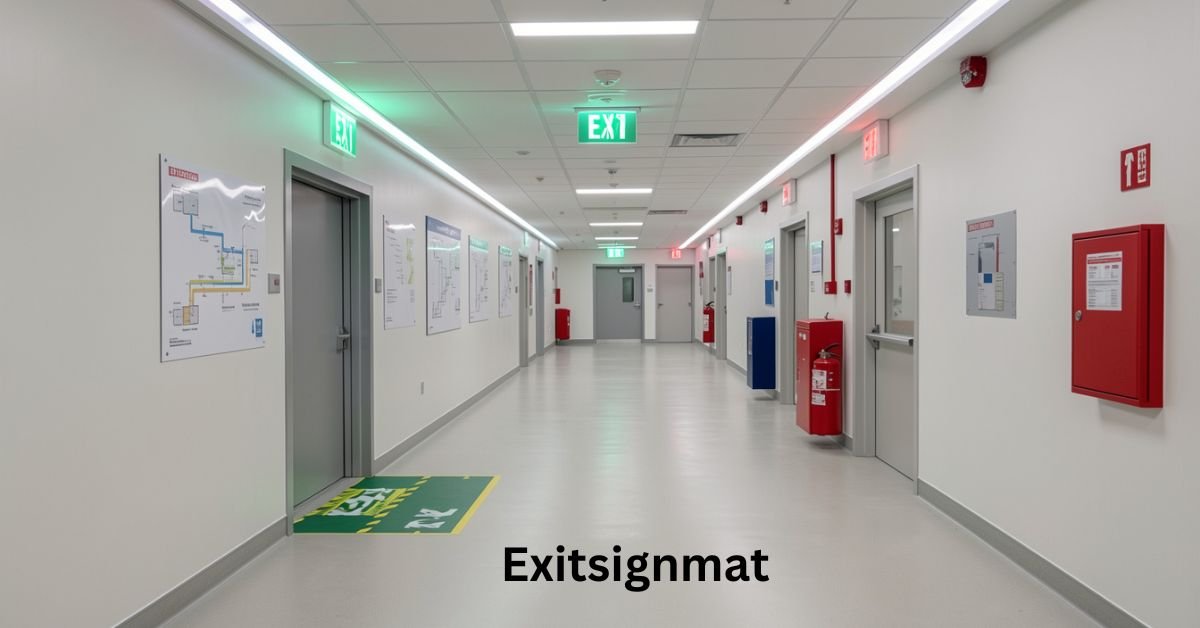
In 2026, building safety standards focus strongly on clear evacuation paths. Organizations such as OSHA and the National Fire Protection Association (NFPA) require:
- Clearly marked exit routes
- Adequate lighting during power loss
- Non-slip walking surfaces
While most rules still focus on overhead signage, many safety experts recommend adding floor-level guidance in high-risk buildings.
This is especially true for:
- Hospitals
- High-rise offices
- Public event venues
- Industrial plants
Before installing any system, building owners should check local fire codes. Some cities now encourage low-level path marking systems as added protection. An exitsignmat can help buildings meet safety goals while also reducing slip hazards near exits.
Materials and Technology Used
Not all safety floor systems are the same. The quality of materials affects durability and visibility.
Common materials include:
- Heavy-duty rubber
- PVC with anti-slip backing
- Photoluminescent (glow-in-the-dark) coatings
- LED light strips
Some mats absorb light during the day and glow during darkness. Others connect to emergency power systems for continuous lighting. Here is a comparison of two common lighting types:
| Feature | Photoluminescent | LED-Enhanced |
| Needs electricity | No | Yes |
| Maintenance | Very low | Moderate |
| Glow duration | 60–90 minutes | Continuous while powered |
| Cost | Lower | Higher |
Choosing the right type depends on building size and risk level. In areas with frequent power outages, glow-based systems are popular. In large commercial buildings, LED systems may provide stronger visibility.
Where Should You Install It?
Proper placement is very important. An exitsignmat should guide people step by step toward an exit. It should never create confusion.
Best locations include:
- Directly in front of exit doors
- At hallway intersections
- At stairwell entrances
- Near emergency assembly routes
Avoid placing mats on uneven flooring. They should lie flat and not curl at the edges. Professional installation is recommended in large buildings. This ensures that arrows point in the correct direction and match official evacuation maps. Clear guidance reduces panic and helps people move faster.
Cost and Long-Term Value
Safety improvements are an investment. The cost of a floor-based exit system depends on size, material, and lighting type.
On average in 2026:
- Basic glow mats cost between $120 and $300 each.
- LED-enhanced versions may cost $250 to $600 each.
- Installation costs vary by building layout.
While this may seem expensive, consider the benefits:
- Reduced injury risk
- Lower liability exposure
- Improved building safety ratings
- Better protection for employees and visitors
Compared to the cost of lawsuits or fire damage, prevention tools are far more affordable. A high-quality exitsignmat can last 5 to 10 years with proper care.
Maintenance and Inspection
Like all safety equipment, floor-level exit systems require regular checks. Monthly inspections should include:
- Checking for fading arrows
- Ensuring the mat lies flat
- Testing LED lighting (if installed)
Cleaning should be done with mild, non-abrasive products. Harsh chemicals can damage glow coatings. If edges start to lift, they should be repaired immediately to prevent tripping. Routine maintenance keeps the system effective and compliant with safety standards.
Real-World Applications
Many industries now use floor-level exit guidance.
- Hospitals: Patients may move slowly or use wheelchairs. Ground-level signs are easier to see.
- Schools: Children respond well to bright arrows on the floor. It makes evacuation drills clearer.
- Warehouses: In noisy environments, visual guidance is more reliable than spoken instructions.
- Airports and Malls: Large crowds benefit from extra direction during emergencies.
In these settings, adding an exitsignmat improves both safety and confidence.
Future Trends in 2026 and Beyond
Safety technology continues to improve. Modern systems now include:
- Motion-activated lighting
- Smart building integration
- Sensors that change direction based on blocked paths
In the future, floor-based exit systems may connect directly to fire alarms. When danger is detected, arrows could automatically guide people away from unsafe areas. As buildings become smarter, layered safety systems will become standard. An exitsignmat is already a strong step in that direction.
FAQs
Is an exitsignmat required by law?
Usually not required, but strongly recommended in high-risk buildings.
Can it replace overhead exit signs?
No. It works best as a support system.
How long does a glow mat stay visible?
Most glow versions shine for 60 to 90 minutes after light exposure.
Is it safe to walk on?
Yes, high-quality mats are designed to be slip-resistant.
How often should it be inspected?
At least once a month and during fire safety checks.
Conclusion
Emergencies are unpredictable. Smoke, darkness, and panic can make it hard to find the way out. That is why clear and visible guidance is so important. Traditional overhead signs are necessary, but they are not always enough. A floor-level solution adds extra protection by guiding people where they naturally look during emergencies.
An exitsignmat improves visibility, supports safety rules, and reduces confusion. It is durable, practical, and useful in many types of buildings from schools to hospitals to offices. If you manage a building, now is the time to review your exit routes. Walk through your space and ask yourself: Would people clearly see where to go in heavy smoke? Adding a simple floor-level exit guide could make a life-saving difference.